


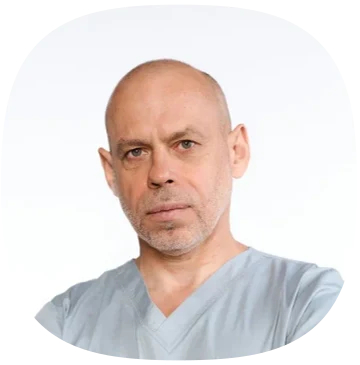
Qualifications and experience
- Osteopath (BSc, DO, Hons.)
- Neurologist, osteopath and reflexotherapist. More than 35 years in wellbeing practices and more than 30 years teaching massage and osteopathic techniques.
- Neurology internship at the State Institute for Advanced Medical Training of the Russian Ministry of Defence.
- European School of Osteopathy, Maidstone, UK.
- Applied neurology with Professor B. A. Arkhipov.
- Studied Eastern medicine and bodywork in Vietnam for six years.
Areas of practice
- Recovery after surgery, injury and infection.
- Low energy: returning to normal after a difficult period.
- Preparation for pregnancy, rehabilitation for mothers and infants after birth, and support during a child’s first years.
- Children from birth: uneven head shape, restlessness, colic, digestive problems, posture, asymmetrical movement and other concerns.
- Care for children with developmental delays of any kind, including children with genetic conditions. Jean developed his own approach for working with these children.
- Almost any pain: back, neck, head, elbow, hand, shoulder, knee, foot or menstrual pain — provided you have already been examined by your treating doctor.
Specialisation
- Children with delays in cognitive and speech development, autism spectrum disorder or ADHD
How does a session work?
A session lasts about an hour. For babies under 6 months, treatment lasts no more than 20 minutes. The remaining time is for consultation.
At the start of the session, your practitioner will ask what is troubling you and what you have already tried. If you have sought medical advice or had scans or other tests, please bring the results.
We will ask about your lifestyle and health, including things that may seem unrelated to your concern. Osteopathy takes a broad view of your health, and the more we know, the better we can help.
We usually ask you to undress to your underwear so we can examine you and carry out tests. Tell your practitioner if you would prefer to stay dressed for any reason. We can do much of the work through clothing, although we may miss things such as a suspicious mole or a scar.
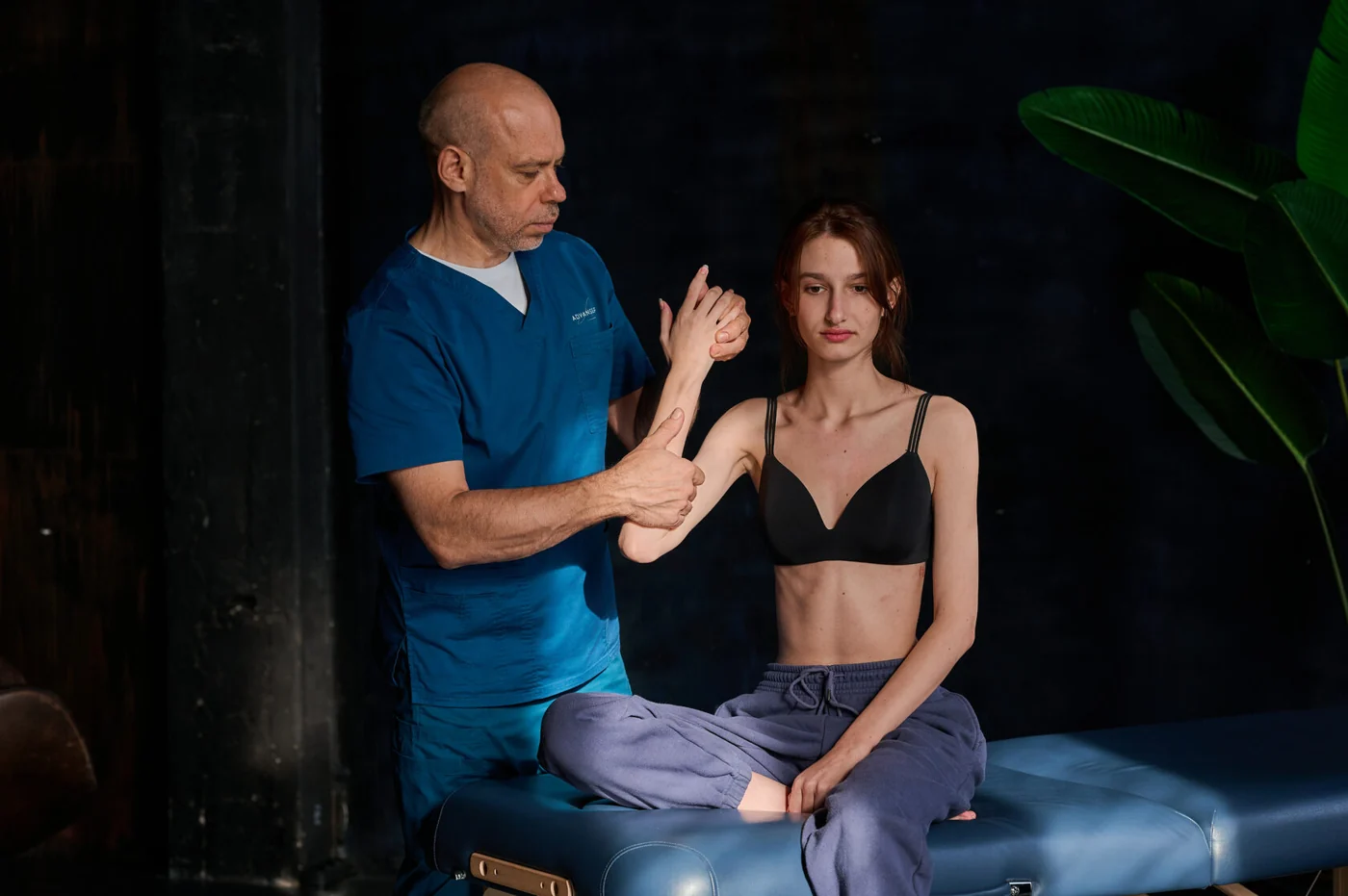
Next, your practitioner will show you a few simple movements to repeat. These tests help assess joint mobility and identify areas that need attention.
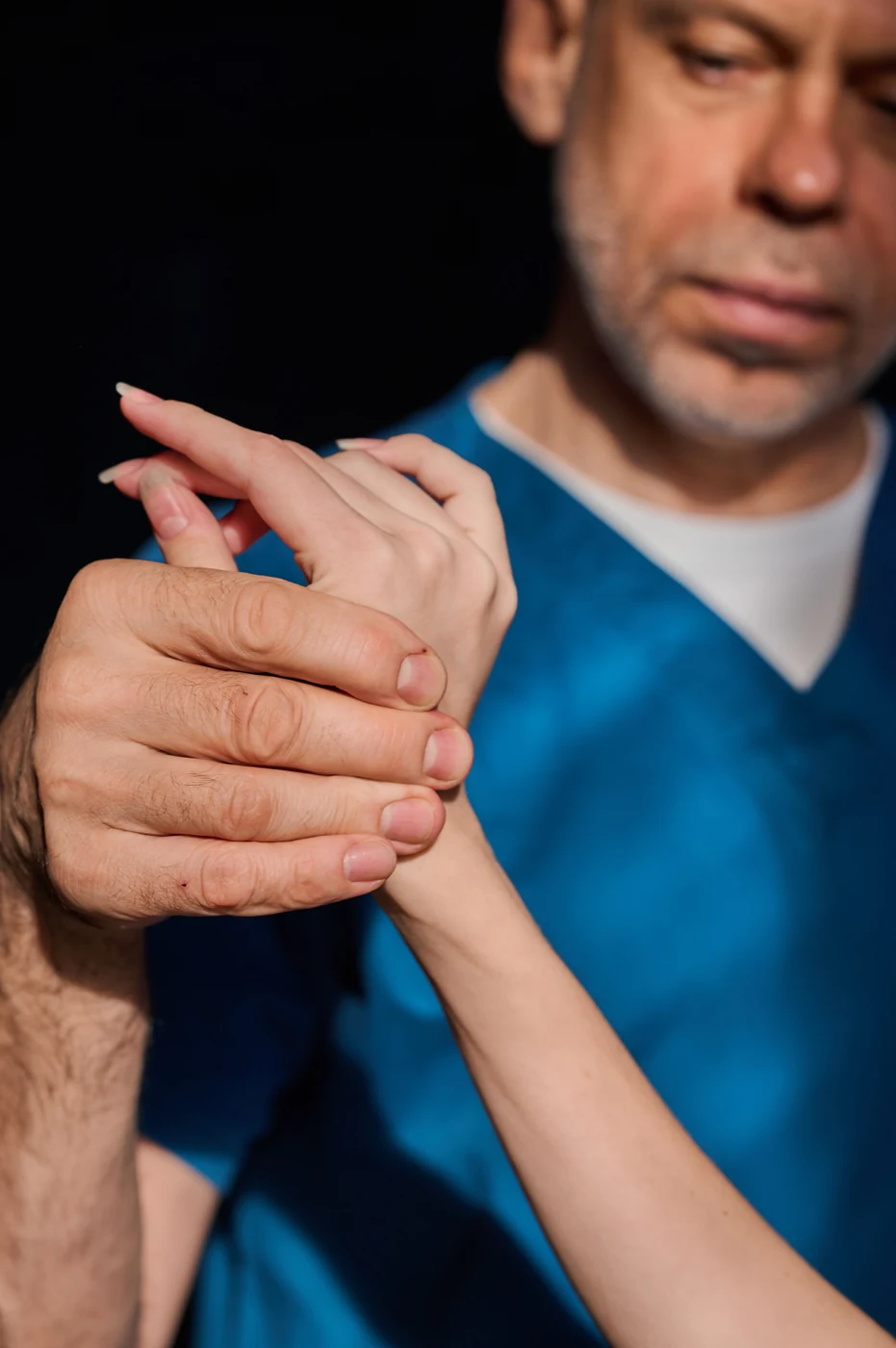
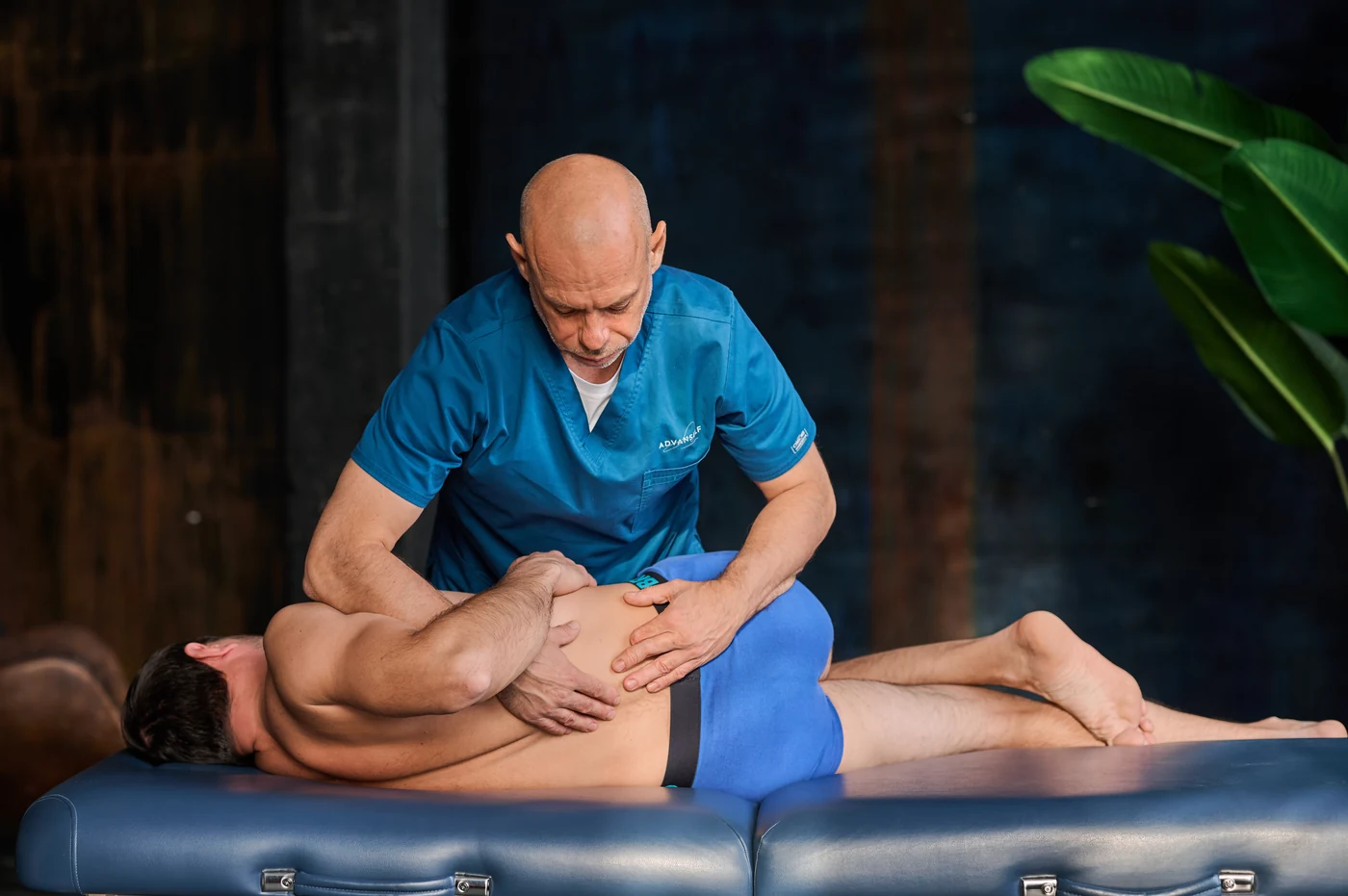
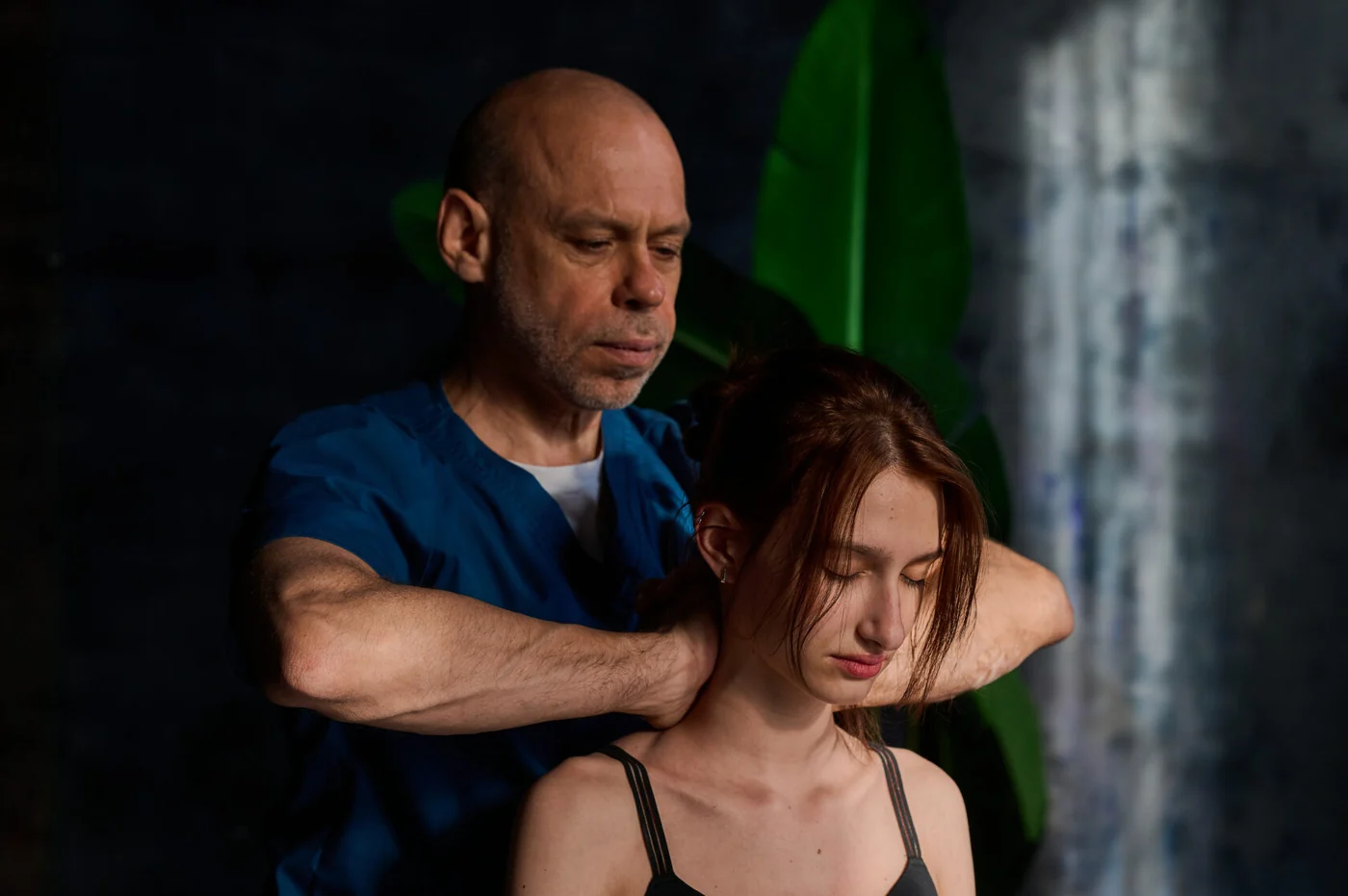
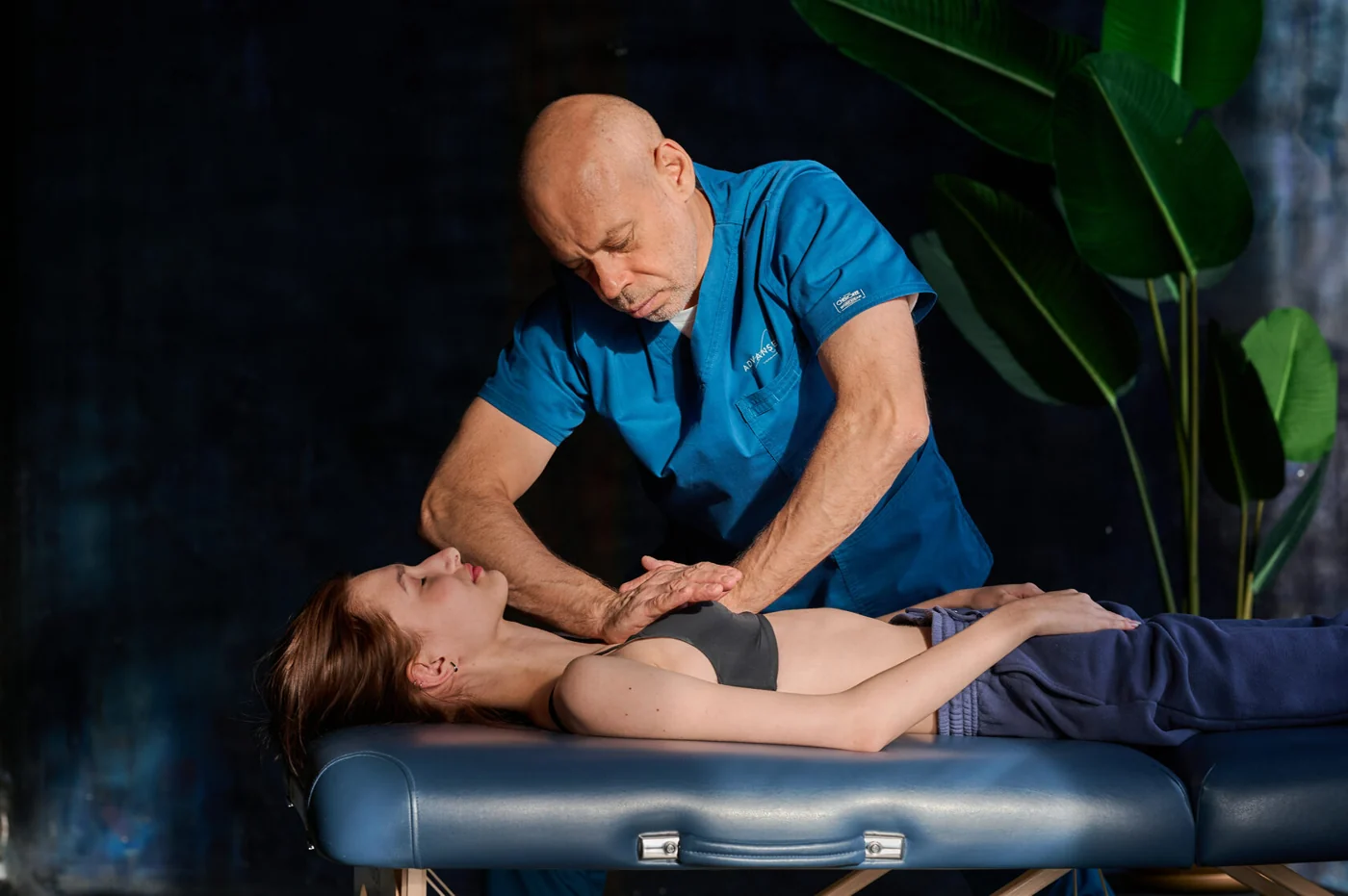
Your practitioner then uses osteopathic techniques. Tell them if something hurts, if you would prefer them to avoid a particular area, or if you would rather avoid techniques that make joints crack. We have several approaches to choose from.
At the end of the session, your practitioner will discuss the next steps in your recovery. These may include further tests, seeing another specialist, exercises, advice on ergonomics, kinesiology taping or the use of essential oils.
After the session
For about three days after the session, it is important not to overload your body. Do not move wardrobes, do a heavy workout or start difficult conversations. You may want to, as there can be a strong surge of energy. Sometimes the opposite happens and you feel very sleepy or hungry. In that case, it is better to do just that.
Pictures
Before your appointment
Please bring any recent clinical investigation results (ultrasound, MRI, X-rays, Doppler ultrasound, etc.).
If coming with a child, bring a bottle, a favourite toy or a cartoon on a phone or tablet.
Book online or call our manager on +374 41 252061 or message us on Telegram or WhatsApp.
The manager will explain the next available appointments and answer your questions.
Where do sessions take place?
Yerevan, 2/10 Aharonyan Street, opposite the PARMA supermarket.
Session fees
- Adult session
- 40,000 AMD
- Child session, ages 5–14
- 35,000 AMD
- First child session under 5
- 35,000 AMD
- Follow-up child session under 5
- 20,000 AMD
Appointment languages
Russian
Any questions?
Who is osteopathy for?
Osteopathy is a versatile approach that works with all organ systems, including the musculoskeletal, nervous, cardiovascular, lymphatic, reproductive, endocrine, urinary and digestive systems. We most often see people with back, neck or joint pain or headaches, among other concerns.
Osteopathy may suit you if you:
- Have pain or discomfort that persists after a doctor found no problem.
- See a doctor, take prescribed medication and are looking for additional ways to support your recovery.
- Want a practitioner who will consider your individual circumstances and health as a whole.
- Have repeatedly been told that your concern is imaginary and want a practitioner who will take it seriously.
- Are worried about yourself or your child even though tests have found no problem.
- Try to avoid unnecessary medication and are looking for safer ways to care for your health.
- Have lost ease of movement.
- Have been through a difficult period and want to get back to normal sooner.
What concerns do you work with?
The range is broad: almost any pain — in the back, neck, head, elbow, hand, shoulder, knee or foot, or during menstruation — provided you have already been examined by your treating doctor; loss of ease of movement; low energy; recovery after a difficult period.
I have never seen an osteopath. Where do I start?
Read the information on this page and book an appointment if the method interests you.
When is osteopathy unsuitable?
Like any approach, osteopathy has its limits. In some cases it can be ineffective or unsafe. Before attending a session, check the following diagnoses and conditions:
- Acute heart attack or stroke.
- Acute injury, for example after a fall or a traffic accident if you have yet to see a doctor.
- Thrombosis.
- Bleeding. If you are menstruating or have haemorrhoids, tell your practitioner. The session can still go ahead.
- Acute infection, including fever, severe weakness, diarrhoea or vomiting. You can come for recovery support once the acute phase has passed.
- Cancer. If you are receiving treatment, check with your treating doctor in advance to confirm whether you can attend.
- Psychiatric conditions or epilepsy that are uncontrolled by medication.
- Dizziness or changes in breathing, bowel movements or urination. See a doctor first.
Osteopathy relies heavily on what the practitioner feels through touch, which is subjective. We cannot diagnose conditions or guarantee the outcome in an individual case. Fortunately, results are generally quite good.
Is osteopathy the same as manual therapy?
These are different specialties with some overlap. Osteopathy includes approaches such as:
- Visceral osteopathy (work with internal organs).
- Cranial osteopathy (work with the skull).
- Work with neurovascular bundles.
- Muscle energy techniques.
- Balanced ligamentous tension, work with fascia and other techniques.
These approaches are outside the scope of manual therapy as described here. Manual therapy focuses mainly on the musculoskeletal system, while osteopathy considers the body as a whole.
Check appointment availability online or with our manager.
All osteopaths